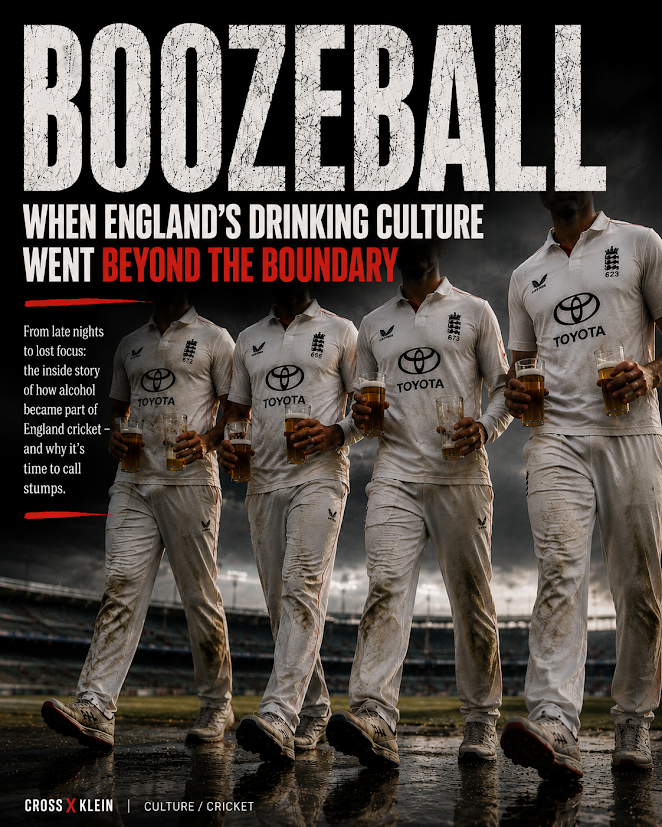
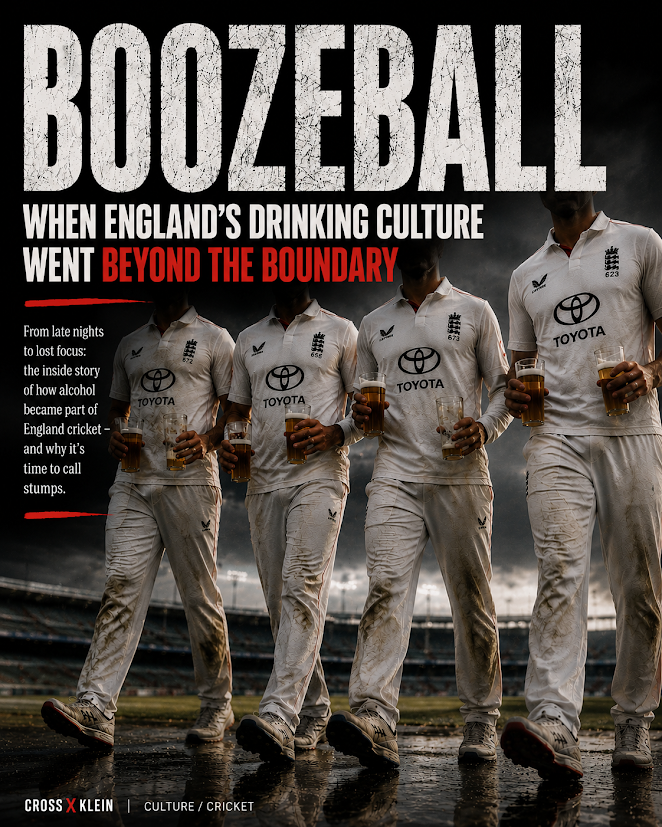
For a sport built on straight bats and good judgement, English cricket is developing an uncomfortable habit of finding itself on the wrong side of last orders.
The latest episode involves England fast bowler Brydon Carse, who appeared in social-media footage in handcuffs speaking to police officers outside a Derby nightclub after Durham’s victory over Derbyshire. Carse was not arrested and no charges were brought, but he has since been removed from England’s squad for the second Test against Pakistan while the Cricket Regulator investigates what happened.
On its own, it might be dismissed as another regrettable night out.
The problem is the scorecard is getting rather crowded.
A few too many wickets falling after dark
Harry Brook was fined £30,000 following an altercation with a nightclub bouncer in Wellington. Brook subsequently described going out alone the night before an ODI as a “terrible mistake” and acknowledged that supporters had every right to be annoyed with his behaviour.
Then came Noosa.
England’s mid-Ashes break in the Queensland resort attracted considerable attention after reports of heavy drinking. The episode became another talking point during a disastrous series and prompted questions over whether England’s relaxed off-field culture had become a little too relaxed. England management defended the decision to give the players downtime, while also looking into reports about excessive drinking.
And the controversies didn’t finish with the winter.
Earlier this summer, Ben Stokes and Gus Atkinson were dropped for the second Test against New Zealand after breaching team rules during a night out in London. There is an important distinction here: the Cricket Regulator subsequently found insufficient evidence that either player had committed a regulatory breach, and the ECB said neither was responsible for the violence that occurred during the incident. They did, however, receive written warnings after an ECB disciplinary process found breaches of contractual rules concerning conduct and behaviour.
Read the Reuters report on the regulator’s findings
One incident is an incident. Two can perhaps be unfortunate.
After that, people understandably start looking for a pattern.
Cricket and the demon drink
And this is where England’s former captain makes an interesting intervention.
Ben Stokes rejects the suggestion that the England team has a drinking culture. But he doesn’t reject the wider premise.
Quite the opposite.
Speaking earlier this month, Stokes argued that cricket itself has a longstanding relationship with alcohol which has failed to evolve alongside almost every other aspect of the professional game. He described that relationship as being “embedded within the sport”, stretching from club cricket upwards.
Read Stokes’s comments in Wisden
It’s a fascinating distinction.
Modern international cricketers have nutritionists, strength-and-conditioning programmes, workload monitoring, medical teams and mountains of performance data. Sleep, recovery and hydration can be measured to within an inch of their lives.
And then someone suggests going to the pub.
At which point, apparently, it’s 1987 again.
Stokes’s argument is essentially that this isn’t an England disease. It’s a cricket tradition that professional cricket hasn’t entirely left behind.
There is something to that.
For generations, cricket has treated drinking not merely as something players occasionally do, but as part of the social fabric surrounding the game: the clubhouse bar, the post-match pint, the dressing-room celebration and the touring stories that become folklore.
None of those things automatically constitutes a problem.
A professional athlete having a beer is hardly breaking news, and a team celebrating together isn’t evidence of some institutional descent into alcoholism.
Indeed, Joe Root has made precisely that point. He said in June that he did not believe there was a drinking culture within the England team and argued against a blanket alcohol ban. Players should be able to celebrate together, he said; the important thing is choosing the right time and place.
Read Root’s comments at Sky Sports
The problem isn’t necessarily the pint
The question isn’t whether England cricketers drink.
It’s whether a culture built around alcohol is repeatedly contributing to situations that professional sportsmen — particularly international representatives — would rather not find themselves explaining the following morning.
There is also a danger in joining dots too enthusiastically. Different incidents involved different circumstances, and the evidence does not establish that every controversy resulted from excessive drinking or that England’s entire squad has an alcohol problem.
But perception matters.
Especially when the captain himself is getting tired of answering the same questions.
Following the Carse incident, Root said he was “hacked off” — not simply because of one night out, but because England “continually keep making stupid mistakes away from the game” which distract from what they are doing on the field.
Read Root’s comments to Reuters
That’s perhaps the most damaging part of all this.
England have just beaten Pakistan convincingly in the opening Test. Yet instead of discussing runs, wickets and the second Test, the conversation has once again wandered from the pavilion to the nightclub.
For a team trying to build a culture people can be proud of, that’s quite a hangover.
Perhaps England don’t have a drinking problem.
Perhaps Stokes is right, and cricket simply has an old relationship with alcohol that hasn’t kept pace with the professional game around it.
But when the same questions keep returning, Boozeball is becoming increasingly difficult to dismiss as just bad luck beyond the boundary.